Table of Contents
- Know Your Fiber Before You Wash Natural Fibers
- Reading Fabric Care Labels (and What They Actually Mean)
- How to Hand Wash Cashmere Sweaters and Other Knitwear
- Best Detergent for Natural Fibers: What to Use and Avoid
- Drying Natural Fiber Knitwear Flat: The Only Safe Method
- Is Dry Cleaning Necessary for Natural Fibers?
- Stain Removal, Hard Water, and Seasonal Care for Natural Fibers
- Common Mistakes That Damage Natural Fibers
Last Updated: August 23, 2026
Know Your Fiber Before You Wash Natural Fibers
Understanding what you're washing is the foundation of proper natural fiber care. Not all natural fibers behave the same way, and applying a one-size-fits-all approach is the fastest route to a shrunken, felted, or discolored garment. Natural fibers fall into two broad categories: protein fibers and cellulose fibers. Each responds differently to heat, agitation, pH levels, and moisture.
Protein Fibers: Wool, Cashmere, and Silk
Protein fibers are derived from animal sources and include wool, cashmere, and silk. Their structure is built from keratin (in wool and cashmere) or fibroin (in silk), making them sensitive to heat, alkaline detergents, and mechanical agitation. When exposed to hot water or vigorous rubbing, the scales on wool and cashmere fibers interlock permanently, causing irreversible felting and shrinkage. Silk has a smoother fiber structure but is equally vulnerable to high temperatures and harsh chemistry.
Key sensitivities for protein fibers:
- Heat above roughly 30°C causes felting and shrinkage
- Alkaline detergents strip natural lanolin and damage fiber integrity
- Prolonged soaking weakens the fiber structure
- Wringing or twisting causes permanent distortion
Cellulose Fibers: Linen, Cotton, and Hemp
Cellulose fibers come from plant sources: linen from flax, cotton from the cotton boll, hemp from the cannabis plant. These fibers are generally more durable than protein fibers and can tolerate slightly warmer water and more agitation. However, linen requires attention to wrinkle formation, cotton shrinkage is a real concern in the first wash if not pre-shrunk, and hemp benefits from gentle handling to preserve texture over time.
The practical difference: cellulose fibers can often handle a cool machine wash on a gentle cycle, while protein fibers almost always do better by hand.
Reading Fabric Care Labels (and What They Actually Mean)
A fabric care label is the manufacturer's tested recommendation for that specific garment. According to ASTM International textile care labeling standards, standardized care symbols are designed to communicate washing, drying, ironing, and professional care instructions in a universally readable format.
The symbols you most need to recognize for natural fiber knitwear:
| Symbol | Meaning | What to Do |
|---|---|---|
| Hand in basin | Hand wash only | Wash by hand in cool water |
| Machine with number | Machine wash at that temperature | Use that temp or cooler |
| Circle | Dry clean | Take to a professional |
| Square with circle | Tumble dry | Avoid for most natural fibers |
| Horizontal line in square | Lay flat to dry | Use the towel roll method |
| X through any symbol | Do not do this | Follow the prohibition |
When a label says "dry clean only," it's worth asking whether that is a true requirement or a conservative recommendation. Many natural fiber garments labeled this way can be hand washed successfully with gentle detergent and proper technique. The exception is structured garments with interfacing, padding, or mixed fiber construction, where hand washing genuinely risks damage.
How to Hand Wash Cashmere Sweaters and Other Knitwear
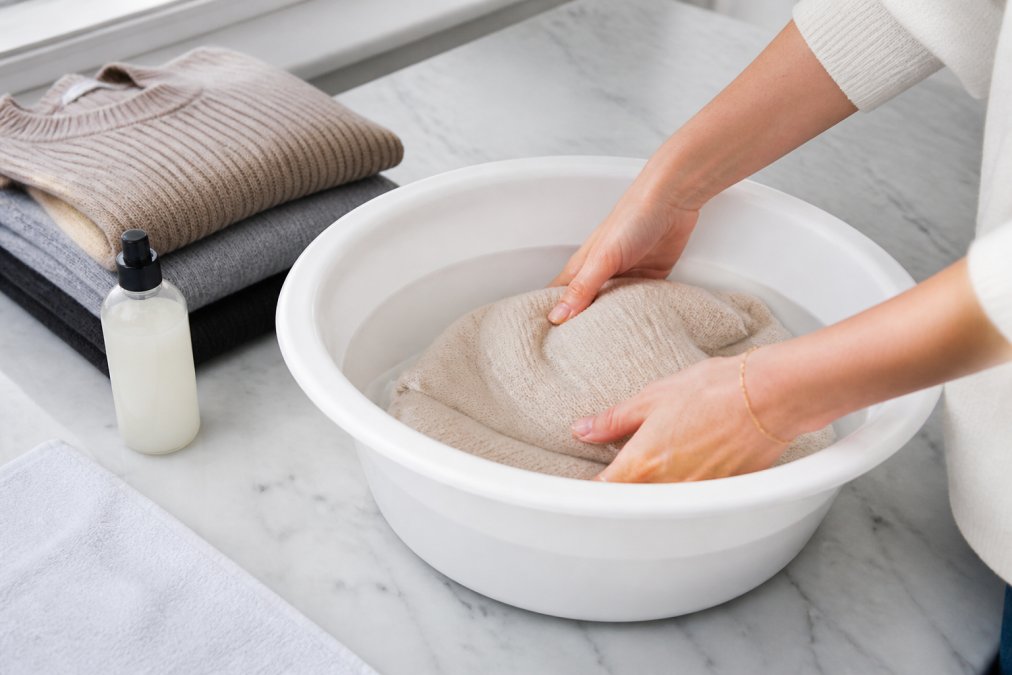
Hand washing is the gold standard for delicate natural fibers. It gives you complete control over water temperature, agitation, and soak time. For cashmere and wool, use genuinely cool water around 20-25°C, anything warmer risks triggering felting.
Step-by-Step Hand Wash Method
Total time: 20-30 minutes
- Fill a clean basin with cool water around 20-25°C.
- Add a small amount of pH-neutral or wool wash detergent (about a teaspoon) and swirl gently to dissolve before adding the garment.
- Submerge the garment fully and press it gently into the water. Do not rub, wring, or agitate.
- Soak for no more than 10 minutes. Set a timer.
- Rinse thoroughly with cool water at the same temperature. Temperature changes cause shock-shrinkage.
- Remove excess water without wringing. Press the garment gently against the side of the basin.
- Use the towel roll method to remove remaining moisture. Lay the garment flat on a clean dry towel, roll together, and press firmly. Transfer to a fresh dry surface to air dry flat.
Machine Washing on the Delicate Cycle: When It Works
The delicate cycle can work for some natural fiber knitwear, particularly more resilient cellulose fibers like linen and cotton, and for wool items specifically labeled as machine washable. For cashmere and fine silk, avoid machine washing unless the care label explicitly permits it.
If you do machine wash:
- Place it inside a mesh laundry bag to reduce friction
- Select the delicate cycle with the shortest spin cycle available
- Use cool water and a small amount of gentle detergent
- Remove immediately after the cycle ends
The spin cycle is where most machine-wash damage occurs. If your machine allows independent spin speed control, choose the lowest setting.
Best Detergent for Natural Fibers: What to Use and Avoid
The best detergent for natural fibers is pH-neutral and free from enzymes, optical brighteners, and bleach. Enzymes are added to many mainstream detergents to break down protein-based stains, but wool and silk are themselves protein fibers. An enzyme-active detergent will gradually degrade the fiber structure of your cashmere sweater.
What to look for on the label:
- "pH-neutral" or "pH-balanced"
- "Wool wash" or "delicate wash" formulations
- Free from enzymes (protease, amylase, lipase, etc.)
- Free from bleach or optical brighteners
- Mild soap or plant-derived surfactants
For linen, cotton, and hemp, a gentle detergent without bleach is sufficient. According to The Woolmark Company's fiber care guidelines, using a specialist wool detergent and cool water is the single most effective way to extend the life of wool and wool-blend garments.
Drying Natural Fiber Knitwear Flat: The Only Safe Method
Drying natural fiber knitwear flat is non-negotiable for maintaining garment shape. Hanging a wet cashmere or wool sweater causes gravity to pull fibers downward while they are in their most vulnerable, saturated state, resulting in stretched-out bodies and elongated sleeves.
The correct method:
- After removing excess water with the towel roll method, transfer the garment to a clean dry surface
- Gently reshape it to its original dimensions while damp
- Allow it to air dry away from direct sunlight and heat sources
- Flip the garment once it is half-dry to allow even drying on both sides
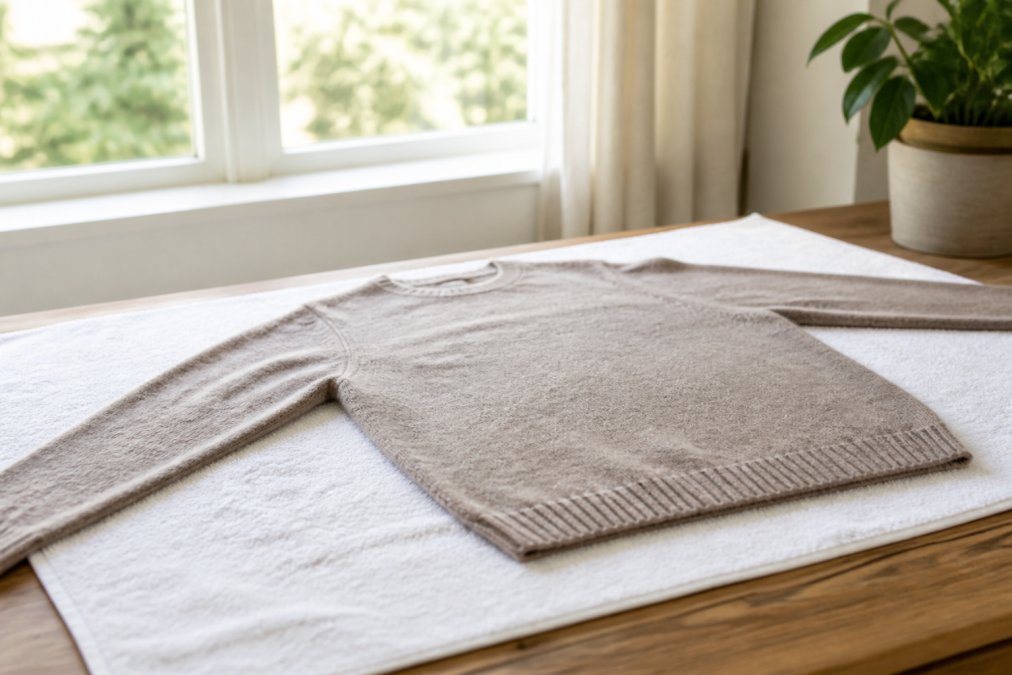
Direct sunlight fades natural dyes and can weaken silk. A radiator or tumble dryer will cause shrinkage and felting. Lay flat is the only genuinely safe method for knitwear.
| Drying Method | Safe for Protein Fibers? | Safe for Cellulose Fibers? | Risk |
|---|---|---|---|
| Lay flat to air dry | Yes | Yes | None when done correctly |
| Drip dry (hung) | No | Acceptable for linen | Stretching and distortion |
| Tumble dryer | No | Low heat only, with caution | Shrinkage, felting |
| Direct sunlight | No | Limited | Fading, fiber weakening |
| Radiator/heater | No | No | Shrinkage, brittleness |
Is Dry Cleaning Necessary for Natural Fibers?
Dry cleaning is not strictly necessary for most natural fiber knitwear, but it is sometimes the right choice. Dry cleaning is genuinely necessary when the garment has structured elements like shoulder pads or interfacing that would distort when wet, the care label explicitly states "dry clean only" with complex construction, or the item is heavily soiled.
For straightforward cashmere sweaters, wool knitwear, and silk scarves, skilled hand washing with wool wash detergent is equally effective and considerably gentler than commercial dry cleaning solvents. The Textile Institute's guidance on solvent cleaning notes that repeated dry cleaning can gradually affect the texture and hand feel of fine natural fibers.
Reserve dry cleaning for structured garments and heavily soiled items. For everyday knitwear, hand washing is the preferred method.
Stain Removal, Hard Water, and Seasonal Care for Natural Fibers
Spot Cleaning and Stain Treatment
Spot cleaning is the first line of defense for stains. Act quickly, work gently, and avoid rubbing.
The basic approach:
- Blot the stain immediately with a clean, dry cloth
- Apply a small amount of cool water to dilute the stain, blotting rather than rubbing
- If needed, apply a tiny amount of mild soap or pH-neutral detergent directly to the stain
- Work it in gently with a fingertip, then rinse with cool water
For protein-based stains (blood, egg, dairy) on protein fiber garments, use cool water only. Hot water causes protein to set permanently. For oil-based stains, a small amount of mild dish soap applied before soaking can help lift grease.
Hard Water vs. Soft Water: What Changes
Hard water contains elevated levels of dissolved minerals that interact with detergent and leave residue on natural fibers, making garments feel stiff or dull. If washing in hard water, use slightly more detergent, add a tablespoon of white vinegar to the rinse water, and rinse more thoroughly. Soft water requires less detergent and rinses more cleanly.
Seasonal Care Cycles and Storage
Before storing for the season:
- Wash every item before storage, even if it appears clean. Body oils and invisible food residue attract moths.
- Allow garments to dry completely before folding.
- Fold knitwear flat rather than hanging.
- Store in breathable cotton bags or acid-free tissue paper. Avoid plastic bags.
- Add cedar blocks or lavender sachets as natural moth deterrents.
Using a genuinely biodegradable, plant-derived wool wash means the wash water is considerably safer for drain ecosystems than water containing synthetic surfactants.
Common Mistakes That Damage Natural Fibers
Most garment damage is avoidable. The mistakes below account for the majority of ruined natural fiber knitwear.
Using the wrong detergent. Biological detergents are the most common cause of gradual fiber degradation in wool and cashmere.
Washing in water that is too warm. Even a few degrees above the recommended temperature can trigger felting.
Agitating too vigorously. Rubbing, wringing, or scrubbing wet natural fibers causes mechanical damage that cannot be undone.
Hanging wet knitwear to dry. Gravity and moisture together stretch fibers permanently.
Skipping the pre-storage wash. This is the primary cause of moth damage.
Washing too frequently. Natural fibers are naturally antimicrobial and odor-resistant. Airing a garment between wears is often sufficient.
For more detailed guidance on specific fiber types, the International Wool Textile Organisation's consumer care resources provides tested recommendations across a range of natural fiber categories.
Frequently Asked Questions
Can you wash on the delicate cycle if the label says dry clean only?
It depends on the fiber. Many natural fibers labeled 'dry clean only', including cashmere and fine wool, can be safely hand washed in cool water with a pH-neutral, gentle detergent. The delicate cycle on a machine introduces more agitation than hand washing and carries a higher risk of shrinkage or felting. When in doubt, hand wash rather than machine wash, and always lay the piece flat to dry. True 'dry clean only' labels on heavily structured or lined garments should be respected.
How do I prevent natural fibers from shrinking or pilling?
Shrinkage in protein fibers like wool and cashmere is caused by heat and agitation, which cause the fiber scales to lock together permanently. Always use cool or tepid water, never hot. Avoid wringing or twisting the garment. For pilling, turn knitwear inside out before washing, use a mesh laundry bag if machine washing on the delicate cycle, and keep spin cycles short. Washing less frequently and spot cleaning between full washes also extends fiber integrity significantly.
What is the best detergent for washing natural fibers like cashmere and silk?
Choose a pH-neutral, gentle detergent specifically formulated for delicate fabrics or wool. Standard laundry detergents are often alkaline, which strips the natural oils from protein fibers like cashmere, silk, and wool, leaving them brittle and prone to damage over time. Avoid detergents with enzymes (proteases), optical brighteners, or bleach. A small amount, roughly a teaspoon, is enough for a hand wash. Mild soap or a dedicated wool wash product are both reliable options.
Should 100% cotton or linen go in the dryer?
Cotton and linen can tolerate more heat than protein fibers, but machine drying still causes shrinkage, especially in the first few washes. If you do use a dryer, choose a low heat or air-only setting and remove items while still slightly damp. For linen, air drying is preferred to preserve the fabric's natural texture and prevent excessive wrinkling. For both fibers, laying flat or hanging to drip dry is the safest long-term choice to maintain the garment's original shape and size.
Caring for natural fiber knitwear takes a few extra minutes, but the reward is a garment that holds its shape, softness, and color for years rather than seasons. ISLEFIELD pieces are designed to be lived in, crafted from premium natural fibers with durability built into every stitch. The small-batch construction and natural fiber sourcing mean each piece responds well to the hand washing and flat drying methods described above. Explore the collection and invest in knitwear worth caring for.
This article was written using GrandRanker